
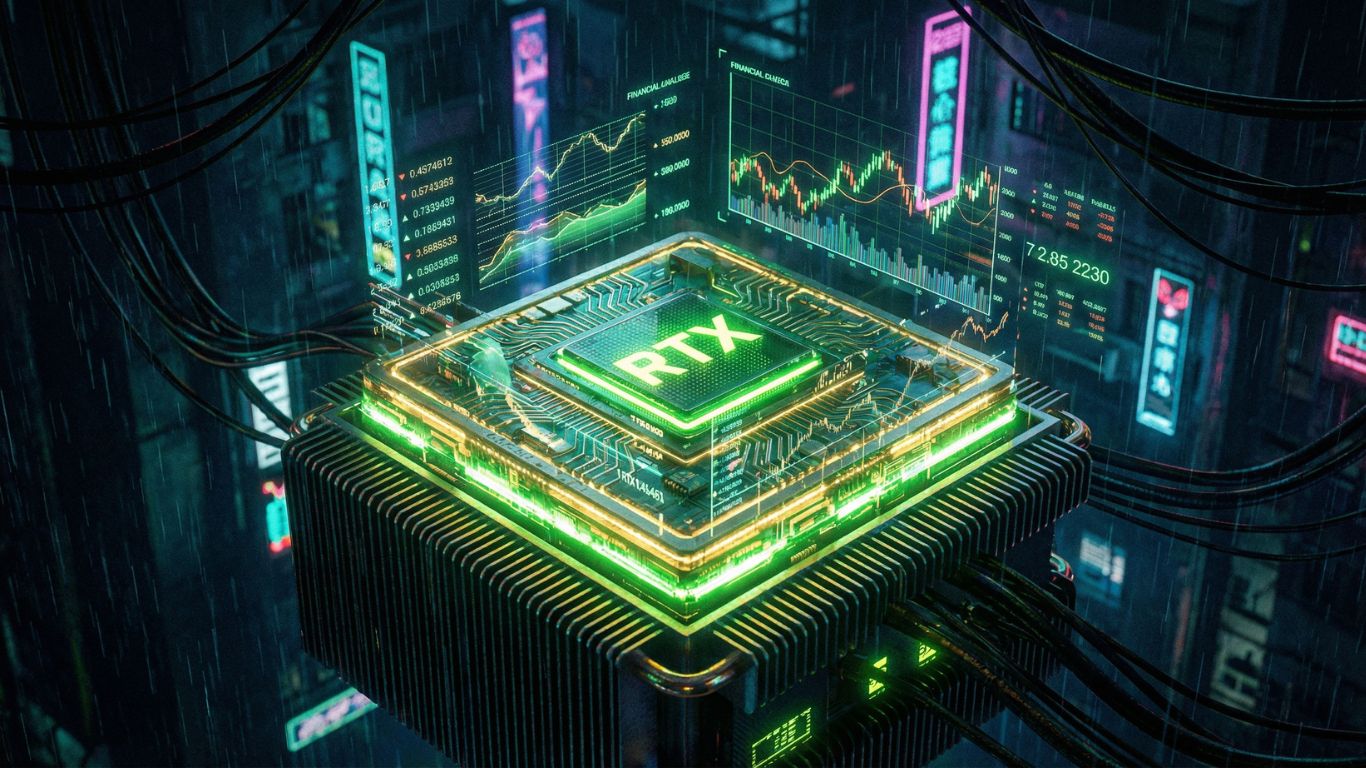
In finance and quantitative trading, "computing power is power" isn't a metaphor—it's reality. From the early days of CPU-based backtesting, to the rise of entry-level GTX-1660 GPUs, to the massive CUDA cores of RTX-3090 class cards, each generation of hardware directly determines who can complete strategy validation and risk assessment in milliseconds. Ze Yu United Development, with years of experience in system integration and AI applications, has witnessed and participated in this computing revolution—from "good enough" to "speed wins."
In the GTX-1660 era, most small and medium institutions relied on single machines and single cards for historical backtesting and simple factor analysis. Computing bottlenecks forced complex models and large-scale simulations onto the cloud or outsourced, with high costs and latency. After the RTX-30 series arrived, the 24GB VRAM and tens of thousands of CUDA cores in RTX-3090 brought "on-premises high-load computing" back to enterprise data centers and workstations. Strategy iterations went from "finish overnight" to "results in minutes," dramatically shortening decision cycles.
The leap in computing power isn't just bigger numbers—it's making "instant verification, instant decision-making" affordable for more teams. From backtesting and risk control to real-time pricing and AI inference, a single card can now support an entire pipeline.
Through finance and manufacturing projects, Ze Yu has repeatedly validated one principle: hardware selection must align with software architecture, data flows, and operational costs. Blindly chasing the highest specs often leads to runaway power consumption, cooling costs, and procurement budgets. Conversely, cutting hardware costs while bottlenecking critical workflows creates even higher latency and opportunity costs. Our approach favors "tiered computing power": critical paths use RTX-3090 or equivalent GPUs to ensure latency and throughput, while batch and development environments use GTX-1660 or mid-range cards, balancing performance with total cost of ownership.
From Hardware to Software: The Key to Monetizing Computing Power
Even the strongest computing power can't create business value without corresponding software and workflows. When integrating Doni AI with financial modules, Ze Yu prioritizes GPU resource scheduling and isolation: real-time trading and risk control take priority on high-end cards, while research and backtesting run during off-peak hours or on dedicated nodes to avoid interference. Additionally, our code from GTX-1660 to RTX-3090 uses unified interfaces and configuration files, allowing clients to upgrade or expand hardware without rewriting entire strategies—just adjust resource allocation.
- Tiered Computing Power: High-end GPUs for critical paths, mid-range cards for batch and development
- Hardware-Software Integration: Scheduling, isolation, and resource allocation aligned with business workflows
- Code Portability: Same logic can scale and adjust latency across hardware tiers
- Total Cost of Ownership: Balancing performance, power consumption, cooling, and procurement budgets
- Future Expansion: Reserved interfaces and architecture for next-generation GPU integration
The next chapter of "computing power is power" will be distributed and hybrid cloud collaboration: local RTX-3090s handle low-latency decisions, while the cloud processes large-scale historical backtesting and model training. Ze Yu continues iterating with clients on this path, ensuring every bit of computing power is spent wisely, truly driving digital transformation in finance and industry.